
Searching the Charlotte Court Docket
Charlotte runs its government through the official City of Charlotte site, which lists contacts and city information but offers no city court clerk, calendar, docket search, or fine payment. The county's General Sessions division states plainly that it serves Charlotte. So a county citation, or a limited civil or criminal matter, starts there unless the paperwork names a different court.
- Read the ticket, summons, or notice for the exact court name.
- Search Dickson TnCIS with General Sessions and the right case type.
- Use the party name, year, or numeric portion of the case number.
- Call General Sessions Clerk Leslie Shelton at 615-789-5414 to confirm the match and date.
- Move to Circuit, Chancery, Juvenile, Archives, or a city court only when the record calls for it.
The statewide TnCIS page names offices that take part and nothing more. It is not one big Tennessee database, and appellate Public Case History only covers a case once it reaches an appellate court.
Charlotte General Sessions Route
For most local matters, General Sessions is the clearest route. Leslie Shelton's office keeps the limited-jurisdiction civil and criminal dockets, traffic administration, process service, and court papers. Find the counter at the Justice Center, 500 Spring Street, P.O. Box 217, Charlotte, TN 37036. Doors are open Monday through Friday, 8:00 a.m. to 4:00 p.m.
Dickson County General Sessions
500 Spring Street
P.O. Box 217
Charlotte, TN 37036
615-789-5414
Ask for the active setting, courtroom, status, and copy process.
A ticket written near Charlotte does not settle which court has it. Read the printed court name first, then let the clerk sort out any mismatch.
Charlotte Municipal Court Basics
Charlotte publishes no separate municipal court page or city clerk contact. The county's own court description says General Sessions serves city officers from Charlotte and Vanleer. That single statement carries weight. It makes the county General Sessions clerk the practical first stop for many matters that began in Charlotte. White Bluff, Burns, and the City of Dickson are different. Each publishes a municipal court route, so do not assume Charlotte has one. Never invent a city docket or payment system for it. When a citation names another tribunal, follow that court and confirm with its clerk.
Charlotte Weekly Court Calls
Dickson County publishes recurring General Sessions blocks at the Charlotte Justice Center. Those blocks tell you when court runs, not whether your case is on it. For a real date you need the docket, a notice, or word from the clerk.
| Day | Charlotte-area setting | Time |
|---|---|---|
| Tuesday | Traffic Court | 9:00 a.m. |
| Tuesday | Probation violation | 1:00 p.m. |
| Wednesday | Civil docket call | 10:00 a.m. |
| Thursday | Criminal municipal | 9:00 a.m. |
| Friday | Criminal county | 9:00 a.m. |
When you call, give the case number and ask if the entry is active, reset, continued, or complete. A recurring block never substitutes for an order.
Court Dates and Settings in Charlotte
A Charlotte court date can carry several fields, from court type to building. Check each one. The answer can shift with any of them.
| Date | The case-specific date in the newest notice or entry. |
|---|---|
| Time | The published call or individually assigned time. |
| Courtroom | The Justice Center room or another confirmed location. |
| Judge | The officer assigned to that particular setting. |
| Setting Type | Traffic, civil docket call, criminal, motion, plea, or trial. |
Paper and portal disagree on a date? Call the clerk. A continuance or reset simply moves the setting; it does not dismiss the case.
Charlotte Justice Center Counter
Because Charlotte is the county seat, addresses get tangled. The current Circuit, Chancery, and General Sessions offices sit at the Justice Center. Its address is 500 Spring Street. The historic courthouse is a genuine landmark. But it is not automatically the clerk counter or courtroom for your case. For Circuit civil dockets, criminal dockets, and appeals, call Pam Lewis at 615-789-7010. Chancery, domestic, probate, workers' compensation, and related files belong to Lynn Collins at 615-789-7011. General Sessions stays with Leslie Shelton. Juvenile dates run through Juvenile Services at 615-789-0250.
Traffic Tickets in Charlotte
A Charlotte-related citation follows the county route through General Sessions. The exception is a ticket naming another court. Search General Sessions in TnCIS first, then call the clerk. Traffic Court runs Tuesday at 9:00 a.m. Tickets say the block covers guilty pleas and proof of violations. But that schedule does not prove every Charlotte ticket lands on that day. Have your citation number and issuing agency handy when you call. Ask if the matter can be resolved before court. Ask whether you must appear, and which record will show the outcome. A payment receipt is not the full court docket.
Charlotte Historic Court Records
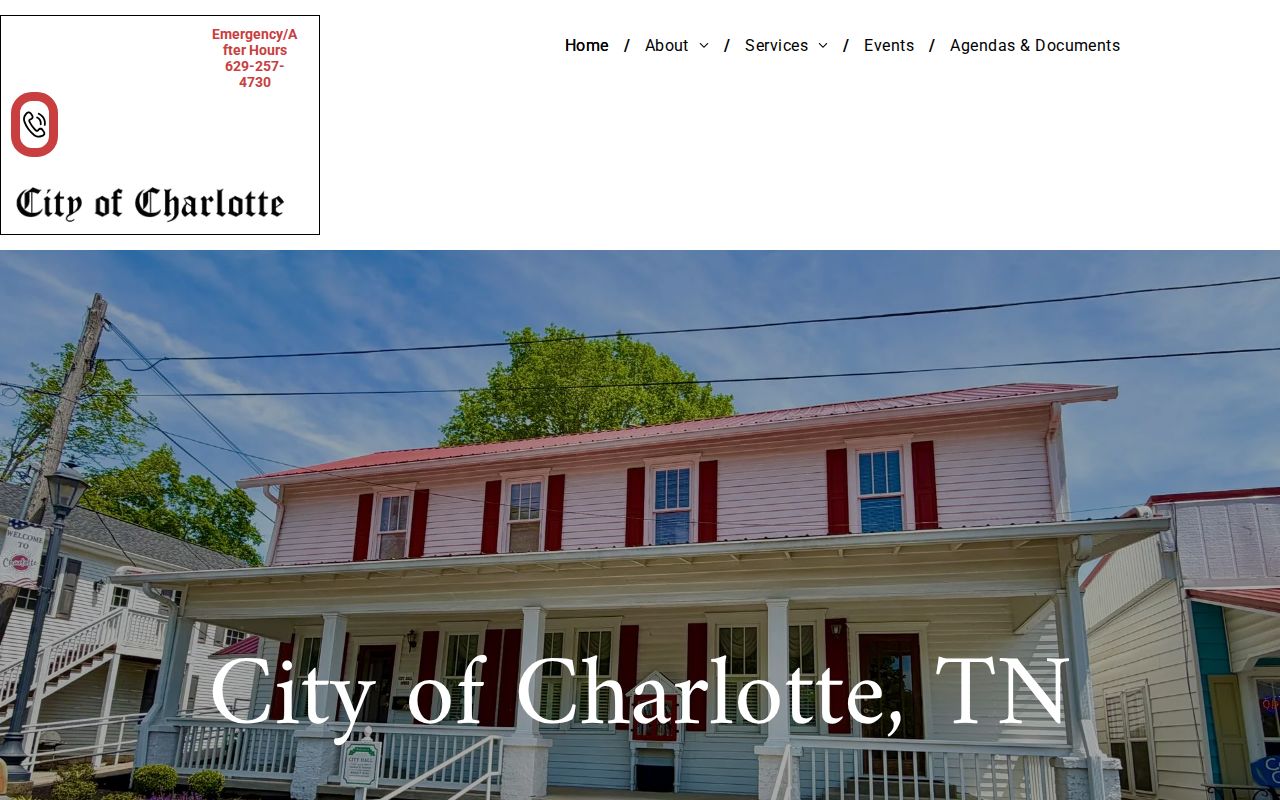
Charlotte became the county seat in 1804. A log courthouse went up in 1806. A tornado struck in 1830, prompting repairs and a hunt for scattered court papers, and court convened in the rebuilt structure later that same year. From 1870 through 1899, Circuit and Chancery also met in Dickson while County Court stayed in Charlotte. The city today is described by the official Charlotte source:
Old files and microfilm questions belong to the Dickson County Archives at 4 Court Square, 615-789-7012. Archives is a separate office from the clerks who run the active docket.
Charlotte Court Accessibility Check
One county notice says the historic courtroom sits on a second floor with no elevator. When someone needs mobility access, proceedings can move to an accessible first-floor room. Contact the court before the hearing to arrange it. This is also why courthouse photos are a poor guide. Confirm the building, entrance, room, and any approved accommodation with the clerk handling your setting.
Where Charlotte Cases Go
General Sessions covers the lower county tier serving Charlotte. Circuit takes the broader civil and criminal matters plus appeals. Chancery handles domestic and probate work. It also covers property, debt, and other equity matters. Juvenile cases go through Juvenile Services on their own track.
Docket flow: Charlotte county-served matter › Dickson County General Sessions › Dickson County Circuit Court.
Cases do not all march through the same doors. Probate sometimes opens in Chancery instead, and an appeal can climb to the Tennessee Court of Appeals or the Court of Criminal Appeals. For a fuller walkthrough of the search fields, see the Dickson County case lookup.
Charlotte Court Record Access Rules
The clerk gives the public several ways in. You can use TnCIS online. Call the right clerk counter, mail a request, or write to a published clerk email. You can also send a written county copy request. Ask whether a public terminal is available before you drive over. One more wrinkle comes from the hosted county policy. An oral request may be enough just to inspect a record. Copies, though, call for its form.
Access framework: Tennessee Supreme Court Rule 34 supports access to public court records while preserving sealed, confidential, deliberative, and protected material. Juvenile records are not an ordinary adult public-index search.
Start a Charlotte request at the court office itself. General Sessions, Circuit, and Chancery all sit at the Justice Center, yet each keeps its own docket. Hand the clerk a party name and a case number or year. Give the filing date range you need. Say plainly whether you want to inspect, a plain copy, a certified copy, or an electronic copy. Keep this in mind. A docket entry and the document filed behind it are two different things.
The county policy dates from 2018. Check current fees, citizenship proof, delivery options, and forms before relying on it. It describes the court, case number, record, date range, and copy type you should name in any request. Under that policy, inspection is free and needs no written form. Copies, or inspection plus copies, require Form 1. Mailed delivery to a Tennessee home is available when you supply postage. The policy also covers itemized estimates, labor charges after fifteen minutes, and prepayment for larger totals.
Archives at 4 Court Square handles historic material, not today's case counter. Before calling Archives, ask the active clerk whether a closed record has moved there. If it has, bring the old court name, an approximate date, and the parties. Include any volume, page, or microfilm reference. Dickson County has a long courthouse history. An old source may picture a building that no longer tells you who holds the record now.
Rule 34 allows reasonable steps that protect records and court operations. Confidential details may be redacted. Sealed material, protected orders, deliberative notes, and juvenile records can sit outside ordinary public access. When only part of a Charlotte court record is public, ask whether that portion can be produced on its own. If the first office lacks custody, ask for a direct handoff to the right clerk. Skip mailing one broad request to every county office.
Charlotte Missing Case Checks
A Charlotte name search can come up empty for a handful of ordinary reasons. You may have picked the wrong court office. The search may need just the numeric part of a formatted reference. The case might be too new for the public result. Or the record may be sealed or restricted. The Dickson public form lists no Chancery checkbox. Juvenile matters run through a separate access route.
Try again with the court and case type narrowed. Use the full party name first, then the year and number. TnCIS normalizes text. It also accepts quoted phrases. Its match-all fallback drops terms from the end when results run thin. Check the displayed criteria so you know what the search actually used. A broad result is not an identity match. A blank result is not proof that no docket exists.
Then call the likely Charlotte-area clerk. General Sessions can search its limited civil, criminal, and traffic index. Circuit can search its own docket plus lower-court appeals. Chancery covers domestic, probate, property, and related files. The clerk may find an entry but no public image. Ask how to inspect or order that exact filing. For an older matter, ask whether Archives holds it now.
Charlotte's location invites one common mix-up. The Dickson County Clerk sits at 4 Court Square. It keeps licenses and county administrative records, not the case dockets for Circuit, Chancery, or General Sessions. The Archives office at that same Court Square address serves historic research. Current court questions belong at the Justice Center unless the active clerk says an older record has transferred.
When Charlotte papers mention an appeal, ask where the new docket begins. Circuit Court hears appeals from General Sessions and from Municipal courts. A later state appeal can show up in Tennessee Public Case History. It cannot replace the original county case record. Match the appellate number to the trial case before treating both entries as one history.
Confirm the current custodian first. That single step saves a needless Charlotte counter trip and keeps your request tied to the correct docket.